Faster, Safer Floor Cleaning!
Reduce Bacteria and Cross Contamination with Dual Compartment Mop Buckets
Learn More!
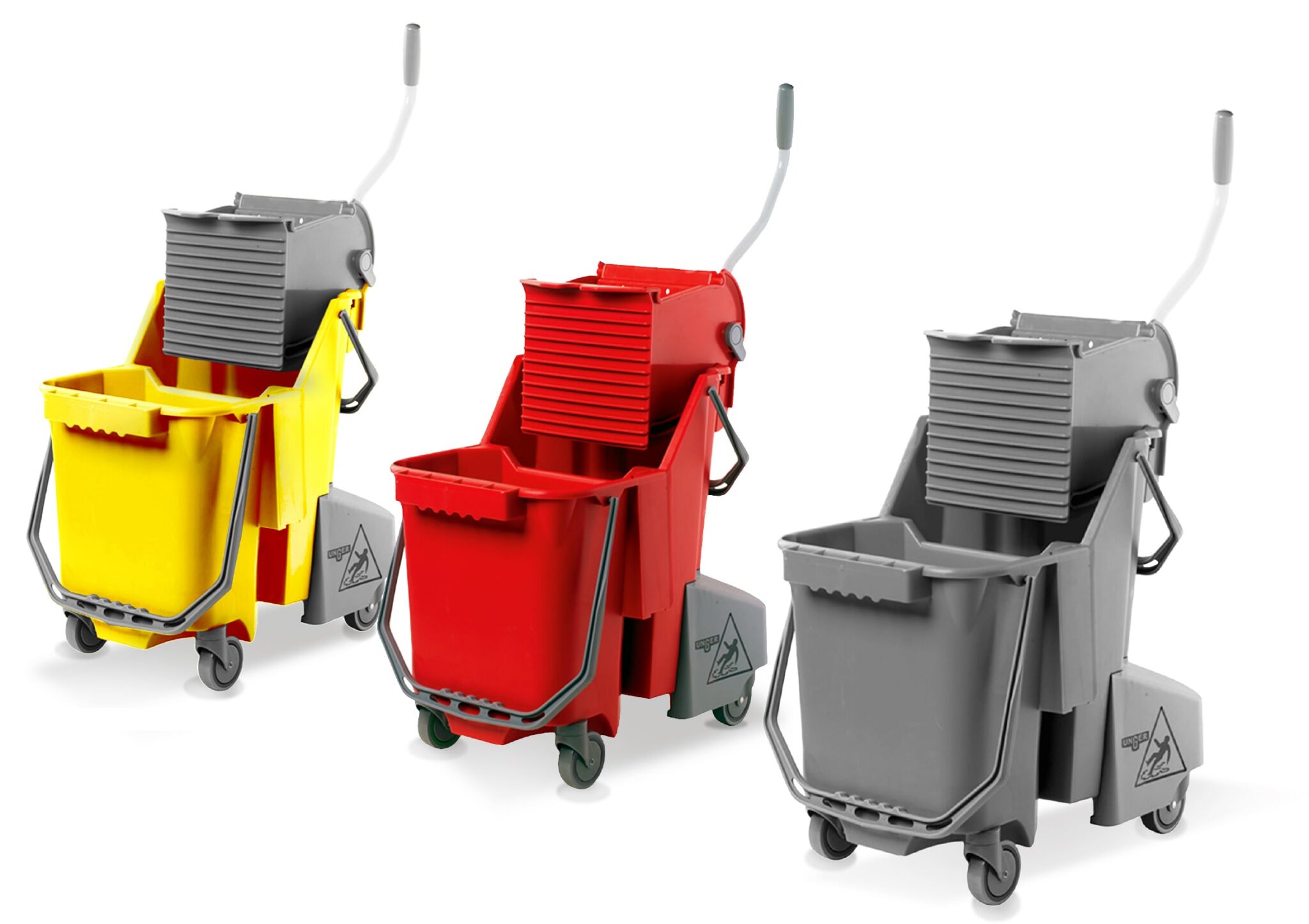
Reduce Bacteria and Cross Contamination with Dual Compartment Mop Buckets
Learn More!
Key Takeaways
In the United States, spring introduces one of the most persistent challenges for commercial window cleaning: airborne pollen. Produced in high volumes, it spreads quickly across exterior glass, frames, and surrounding surfaces.
During peak pollen season, particles settle continuously throughout the day. That means windows cleaned in the morning may already show signs of buildup by the afternoon.
For building service contractors and facility teams, the challenge is managing ongoing contamination that returns as quickly as it is removed.
Pollen behaves differently from most types of outdoor debris. Rather than sitting loosely on the surface, it tends to cling to glass, forming a thin, consistent layer that affects both appearance and cleaning performance.
Tree pollen, which is common across southern states in the spring, is particularly difficult to manage. It is lightweight and naturally sticky, allowing it to adhere to window surfaces and create a visible yellow film.
Once that layer forms, it can:
Unlike heavier debris that can be removed in a single pass, pollen often requires more deliberate cleaning to lift it from the surface fully. If not handled properly, it can spread during the cleaning process and leave streaks or film behind.
Why Windows Get Dirty So Quickly in Spring
One of the biggest challenges during pollen season is how quickly windows lose their clean appearance. Even after a thorough cleaning, new buildup can return within hours.
In the United States, longer pollen seasons and higher concentrations make this more noticeable. According to the CDC, pollen seasons can last for weeks or even months, with southern regions often seeing buildup start earlier in the year and continue well into the season.
Several factors contribute to this rapid recontamination:
In practice, this creates a cycle where cleaning results are difficult to maintain, even when proper techniques are used.
Cleaning water can also become saturated quickly during pollen removal. When this happens, residue may be redistributed across the glass rather than being fully removed, especially on large surfaces where inconsistencies are more noticeable.
Because of this, window cleaning becomes less about achieving a one-time result and more about maintaining a consistent appearance under continuously changing conditions.
Cleaning teams that maintain consistent results during pollen season adjust both their approach and their work planning throughout the day.
In practice, this often includes:
Using the Right Tools for Better Results
The effectiveness of window cleaning during pollen season is closely tied to the tools being used. When buildup is frequent and conditions change throughout the day, tool performance becomes a key factor in maintaining consistent results.
Pure water tools can be especially effective during pollen season because pure water helps attract pollen particles and aid in their removal from the glass. This can help reduce residue and visible streaking on large exterior surfaces where fine buildup is more likely to remain after cleaning.
High-quality squeegees, applicators, and cleaning brushes also play an important role in maintaining even contact with the glass and loosening buildup without spreading it across the surface. When paired with a process designed to adapt to changing seasonal conditions, these tools help teams improve clarity and maintain more consistent results throughout the cleaning cycle.
Pollen season presents a different kind of challenge for commercial window cleaning. Buildup occurs quickly, returns frequently, and affects tool and water performance during cleaning.
Maintaining consistent results requires more than standard routines. It depends on how well cleaning teams can adapt to changing conditions and use equipment that supports effective removal.
Explore professional window-cleaning tools designed to perform in demanding seasonal conditions.
Pollen is lightweight and sticky, which allows it to cling to glass and spread when moisture is introduced, often causing streaking.
During peak pollen season, high-visibility exterior windows may need to be cleaned weekly or every two weeks, depending on tree coverage, wind exposure, and local pollen levels. In areas with heavier pollen, some facilities may also apply interim touch-ups to maintain appearance between full cleaning cycles.
High-quality squeegees, applicators, and clean sleeves help reduce streaking during pollen season by maintaining even contact with the glass and limiting the spread of fine residue. Clean water and frequent sleeve changes also improve results.
Rain can redistribute pollen rather than remove it, often leaving behind residue or streaking as the water dries.