Faster, Safer Floor Cleaning!
Reduce Bacteria and Cross Contamination with Dual Compartment Mop Buckets
Learn More!
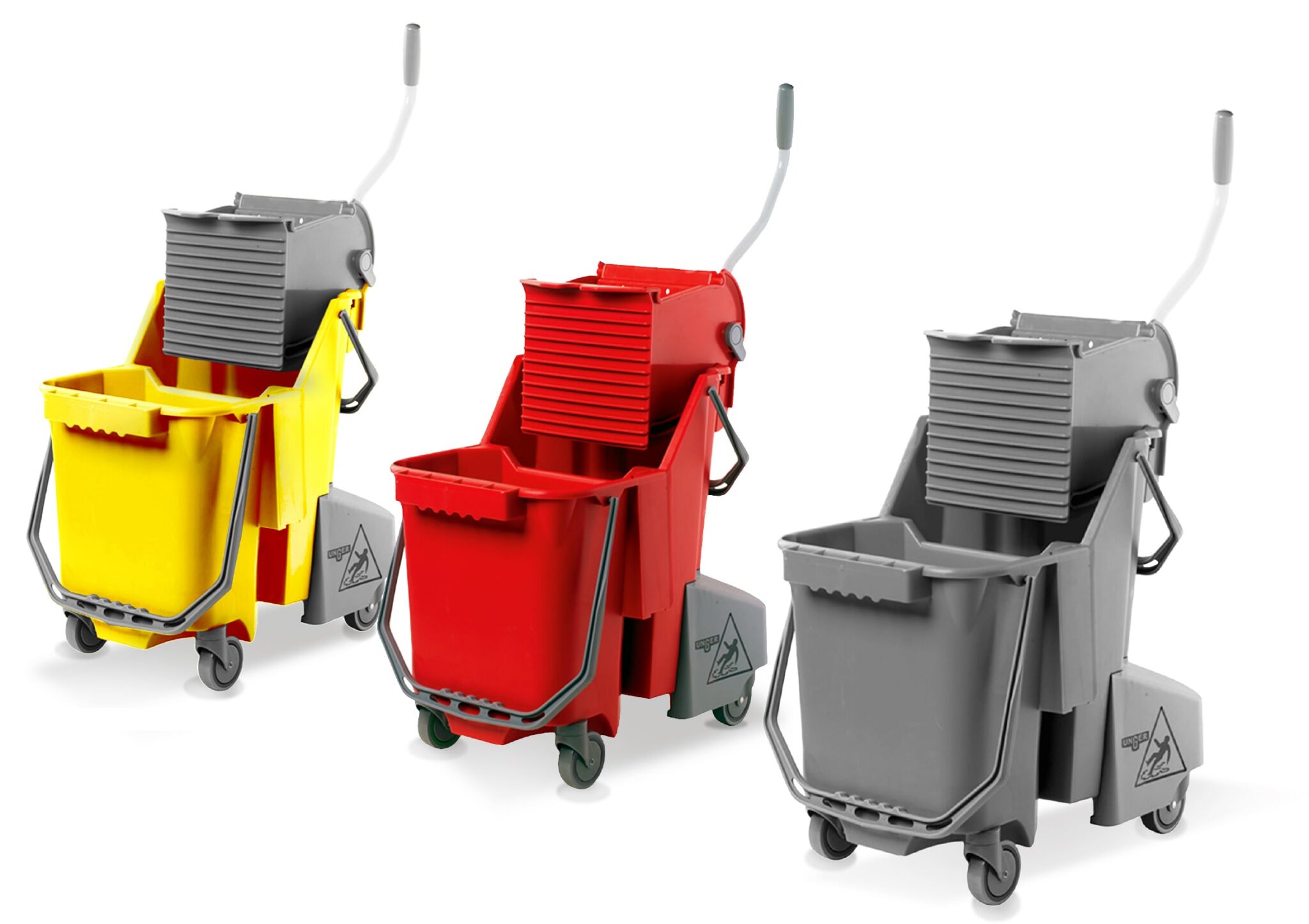
Reduce Bacteria and Cross Contamination with Dual Compartment Mop Buckets
Learn More!
It may seem counterintuitive, but the single chamber bucket you’re using to clean your floors could be making them dirtier.
When you dip a mop into a traditional single-chamber bucket, the clean solution and the dirty solution share the same water. Every rinse reintroduces soil, bacteria, and debris back onto the mop head, and then back onto the floor. In a world where cleaning professionals are held to higher standards than ever before, that’s a problem that can’t be ignored.
Floors represent the largest square footage in commercial buildings, and how you clean them directly affects the health of everyone in those spaces. Post-pandemic, building occupants and facility managers are paying much closer attention to cleaning efficacy, and rightfully so.
The Hidden Danger Inside Your Mop Bucket
Contaminated mop water isn’t just ineffective — it’s a genuine health hazard. Every time a mop is rinsed in a single chamber bucket, the solution accumulates dust mites, mold spores, bacteria, and chemical residue from the floor surface. You’re not just failing to clean; you may actively be redistributing pathogens across the facility.
This matters more now than it did a decade ago. Facilities across healthcare, education, hospitality, and food service are operating under stricter hygiene expectations from regulators, accreditation bodies, and the public. A mopping protocol that hasn’t been updated since 2010 is a liability.
The Dual Mop Bucket Difference
A dual chamber mop bucket system solves the core problem by keeping clean solution and dirty solution completely separate. The mop is loaded from the clean side and wrung out on the dirty side, resulting in the clean solution never becoming contaminated during your task.
The results speak for themselves: when compared to a traditional single-bucket Kentucky mop system, the clean solution chamber in a dual bucket system stays soil-free 13x longer, and cleaning staff can cover twice the area before needing to change solution.
Dual chamber systems may also include:
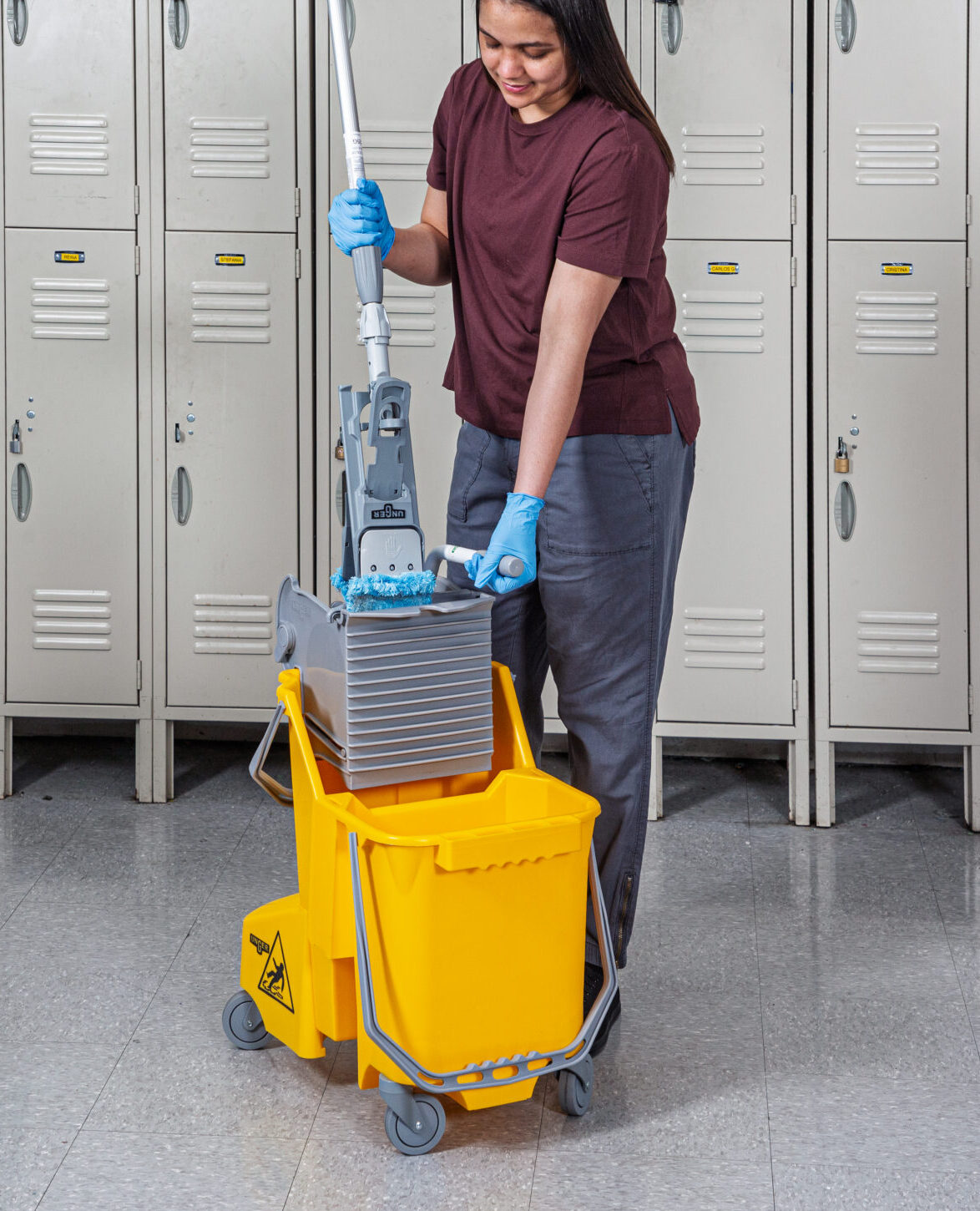
Dual mop buckets are significantly more efficient and environmentally friendly than single-bucket systems. The latter holds just about five gallons of cleaning solution, which cleans about 1,000 square feet when used with a cotton string mop. A five-gallon dual-chamber bucket paired with a microfiber flat mop bucket can clean 3,000 square feet, reducing water and chemical consumption by up to 66 percent. Facilities with ESG commitments, green cleaning certifications (LEED, ISSA CIMS), or water use reduction goals will find dual bucket systems a straightforward win.
Modernize the Mop, Too
The bucket upgrade is most effective when paired with the right mop. Cotton string mops still have a role in certain scenarios, particularly for absorbing large liquid spills. For routine floor maintenance, commercial microfiber mops outperform them across nearly every metric.
A microfiber mop head withstands up to 500 wash cycles, versus roughly 30 for cotton. The fine fibers work electrostatically to attract and trap soil and bacteria rather than pushing them around. Microfiber also requires less chemical solution to achieve the same or better cleaning result, and the lighter weight reduces strain on cleaning staff, a meaningful factor given ongoing labor challenges and increased worker safety awareness across the industry.
Four Protocol Upgrades That Complement Your Efforts:
Switching to a dual mop bucket system is a high-impact change, but floor cleaning efficacy depends on the full protocol. These four practices make a measurable difference:
The Bottom Line for Facility Managers and BSCs
The cleaning industry has changed significantly since single-chamber buckets became standard equipment. Labor costs are higher, sustainability expectations are greater, and occupant health standards have been elevated across every vertical market.
The dual mop bucket system isn’t a premium upgrade; it’s the current standard for professional floor care. Facilities and building service contractors that are still running single-bucket protocols are leaving efficiency, safety, and cost savings on the table.
Clean floors with solution that stays 13x cleaner. Remove twice as much bacteria. Use up to 66% less water and chemicals.
Ready to See UNGER’s Dual Compartment Buckets in action?

FAQ: Single Chamber vs. Dual Chamber Mop Buckets
Why is a single chamber mop bucket a problem for floor cleaning?
With a single chamber bucket, the clean and dirty water share the same container. Every time the mop is rinsed, soil, bacteria, and debris re-enter the solution and get redistributed across the floor rather than removed.
How does a dual chamber mop bucket system work?
A dual chamber bucket keeps clean solution and dirty water in separate compartments. The mop is dipped from the clean side and wrung out on the dirty side, so the clean solution stays uncontaminated throughout the entire task.
How much more efficient is a dual chamber bucket compared to a single bucket system?
A dual chamber system paired with a microfiber flat mop can clean up to 3,000 square feet per fill, compared to roughly 1,000 square feet with a traditional single-bucket and cotton string mop. That’s three times the coverage while using up to 66% less water and chemicals.
Are dual chamber mop buckets suitable for facilities with green cleaning or sustainability goals?
Dual chamber systems are well-suited for facilities pursuing green cleaning certifications such as LEED or ISSA CIMS, or those with water and chemical reduction goals. The significant decrease in solution consumption directly supports ESG commitments and environmental compliance targets.