NEW!
Powerful Nano Filtration with Unger's HydroPower® Nano
See The Product
Key Takeaways
Winter puts more strain on floor cleaning equipment than any other season in the Northeast, Midwest, and other cold-weather regions. Snow, ice melt, tracked-in grit, and constant moisture accelerate wear, often unnoticed during daily cleaning routines. By the time winter ends, equipment that still appears functional may no longer perform safely or efficiently.
Post-winter inspections give janitorial teams the opportunity to identify damage early, restore reliable performance, and prevent minor issues from becoming operational disruptions. While all floor care tools are affected by winter conditions, mop buckets are most affected. They play a central role in water control, mobility, and floor safety, which makes them the most important place to start.
Mop buckets absorb the heaviest workload during winter floor care. By the end of the season, wear is often present even if the bucket still appears usable.
A focused post-winter inspection helps janitorial teams identify early signs of failure before they create safety risks, slow cleaning routines, or lead to unexpected downtime. Each component should be evaluated individually.
Start with the bucket body. Inspect for cracks, leaks, or warping, especially around high-stress areas such as corners, the base, the wringer mount, and the pour spout. Freeze-thaw cycles combined with heavy loads weaken plastic over time, and small fractures can quickly spread with continued use.
Buckets that no longer sit flat or show visible distortion should be removed from service. Structural instability increases the risk of spills, tipping, and uncontrolled water release.
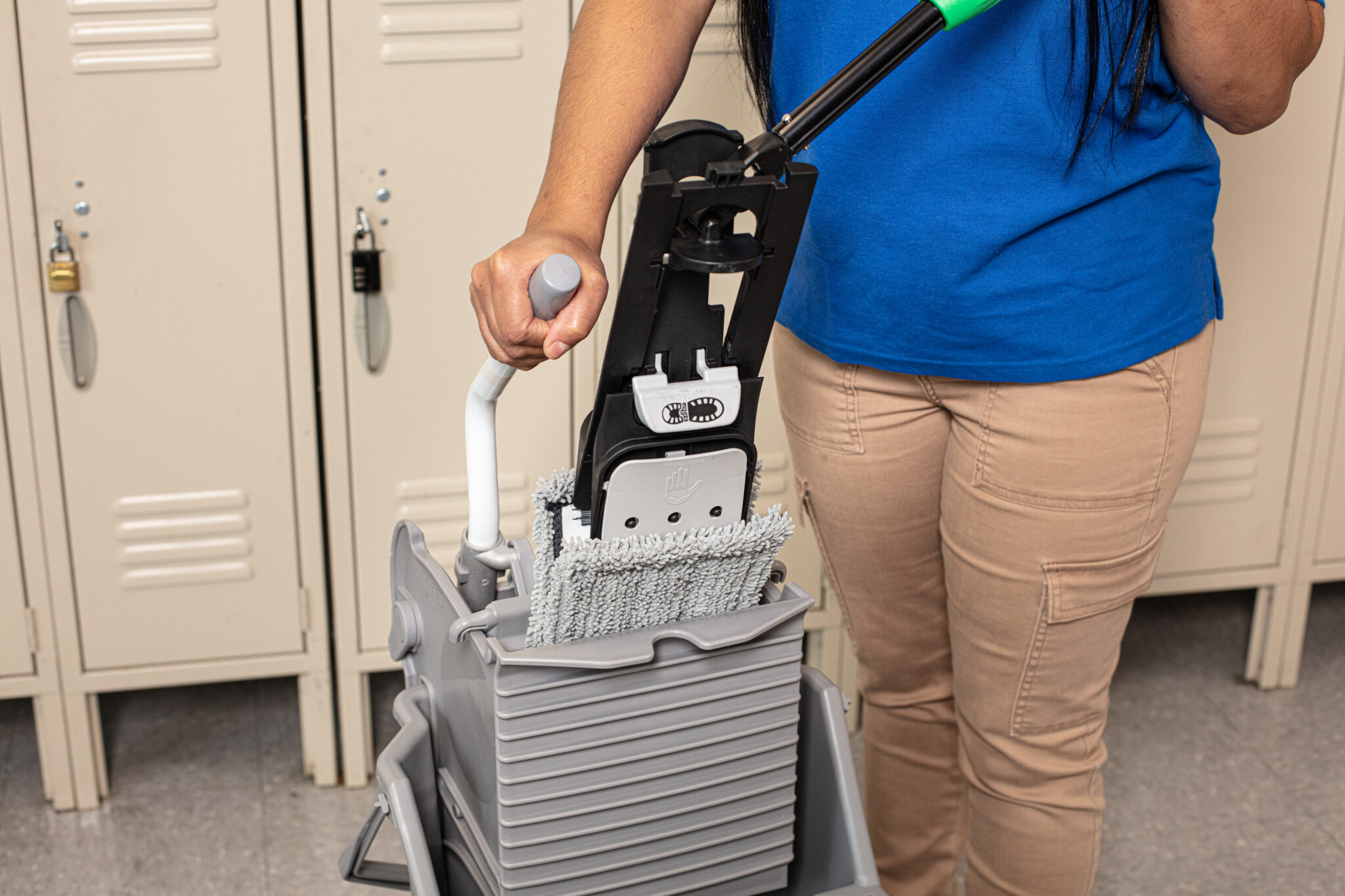
Test the wringer through its full range of motion. It should operate smoothly with consistent tension and even pressure. Watch for misalignment, uneven squeezing, or delayed return, which can reduce water extraction and extend drying times.
Worn wringers also increase staff physical strain and prolong wet floors beyond the intended duration.
. Check that all wheels spin freely, roll smoothly, and remain securely mounted. Buildup inside caster assemblies often causes drag, wobble, or sudden locking.
If cleaning does not restore smooth movement, replacement is the safer and more reliable option.
Inspect handles for cracks, bending, or loose attachment points. Handles should support a fully loaded bucket without flexing. Pour spouts should remain intact and smooth to allow controlled emptying and prevent splashing or spills.
Post-winter inspections establish a reliable baseline for the months ahead. Addressing winter wear early reduces equipment failures during higher-traffic spring and summer periods, supports faster drying times, and lowers the risk of slip hazards.
While mop buckets should remain the primary focus, teams should also remain aware of winter-related wear on supporting tools such as mop heads, handles, floor squeegees, and wet floor signage. Frayed fibers, reduced absorbency, worn blades, or unstable signage can all undermine cleaning effectiveness and safety if left unaddressed.
Standardizing post-winter inspections improves consistency across teams, supports proactive maintenance planning, and helps facilities budget for replacements before failures occur. Ongoing spot checks, proper cleaning after use, and correct storage extend equipment life and help maintain performance well beyond winter.
Reliable floor cleaning starts with mop buckets designed for demanding environments. Durable construction, stable frames, smooth-rolling casters, and effective wringers support safer movement and better water control.
Post-winter is the right time to evaluate whether existing equipment still meets performance standards and supports consistent results across your facility.
Find the Right Mop Bucket for Your Facility
What are the most common mop bucket issues after winter?
Cracks, worn wringers, and stiff or damaged casters caused by prolonged exposure to salt, moisture, and grit.
How often should commercial mop buckets be inspected?
At least quarterly, with a more thorough inspection after winter. High-traffic facilities may benefit from monthly checks.
Can a mop bucket be repaired instead of replaced?
Wringers and casters can often be repaired if the bucket body is sound. Cracked or leaking buckets should be replaced.
Why are casters important for floor safety?
Smooth-rolling casters prevent tipping and sudden stops, reducing worker strain and spill risks.
What other tools should be inspected after winter?
Mop heads, handles, floor squeegees, and wet floor signage should all be reviewed for winter-related wear.
