Faster, Safer Floor Cleaning!
Reduce Bacteria and Cross Contamination with Dual Compartment Mop Buckets
Learn More!
Reduce Bacteria and Cross Contamination with Dual Compartment Mop Buckets
Learn More!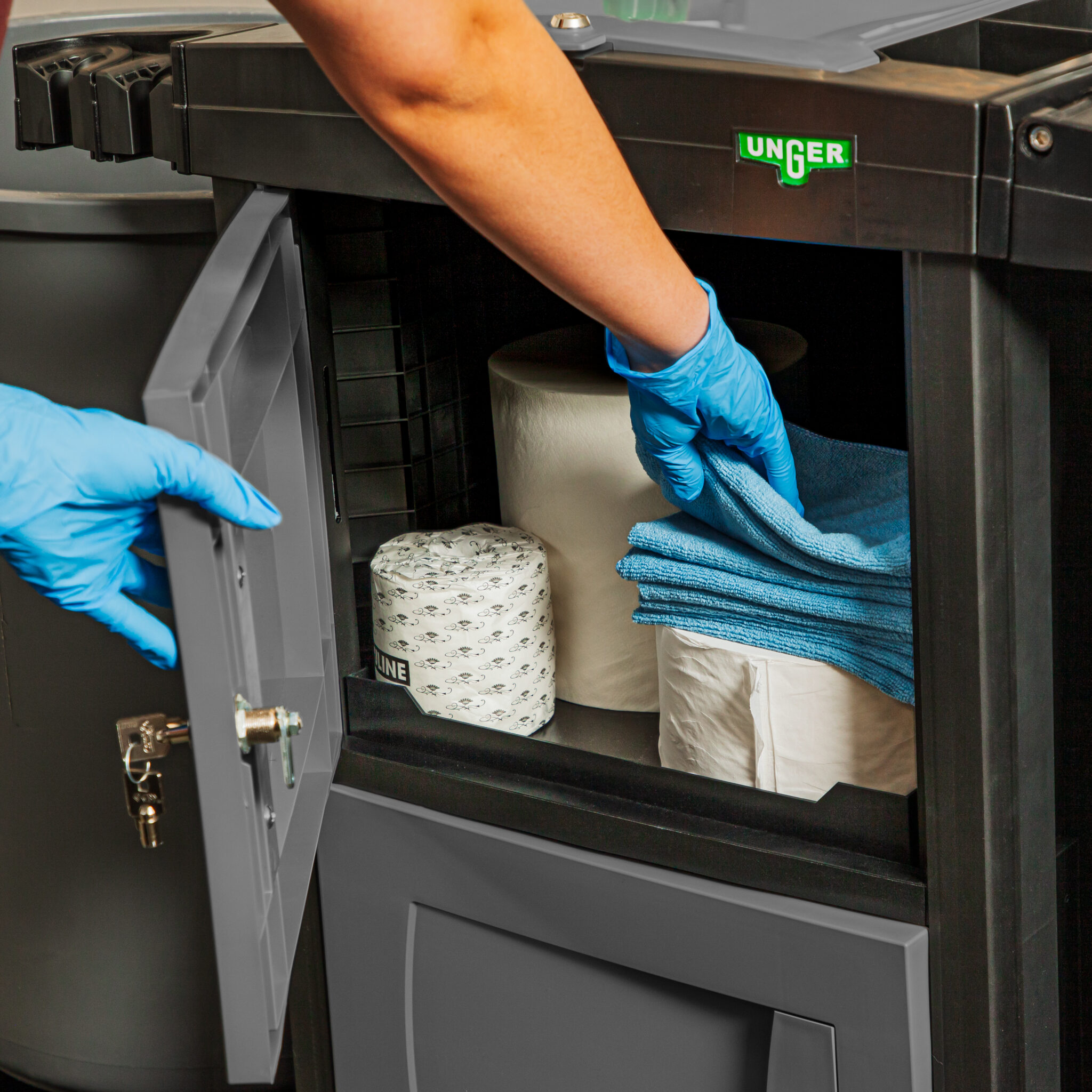
When facility managers run their standard risk assessments, they include the usual suspects: fire exits cleared, wet floor signs positioned, and trip hazards removed. But there’s an often-overlooked blind spot, hiding in plain sight.
A janitorial cleaning cart left in the hallway or outside the restroom while the crew works on their duties will rarely make the assessment and is often thought of as ‘just equipment’. But if left unattended, the cart could become a major hazard.
Why Carts Slip Through
Cleaning carts are rarely locked behind a door, especially during daily cleaning routines. This mobile equipment is often left unattended for stretches during shifts, leaving it accessible to anyone passing by, including tenants, staff, and customers. In a school setting with children, this could be an accident waiting to happen. A cart is more than just equipment; unattended and near the wrong person, it becomes a problem.
What’s Actually at Risk
An unattended cart can go wrong in several ways:
This isn’t about a careless crew; it can happen to even the most experienced staff, on a routine shift, in the few minutes a cart is left alone.
A Checklist to Minimize the Risk
If more than one of the above gives you pause, your carts deserve the same scrutiny as any other equipment on your risk radar.
Equipment Design is Part of the Fix
Policy and procedure close most of the gap, but the cart design can play a role too. Carts built with multiple lockable compartments help separate chemicals and other supplies, keeping them in a secure space and out of easy reach. Having designated spots that can accommodate the weight of trash can support a safer and more securely organized environment. A stable, balanced, and well-made cart will also reduce the risk of tipping.
Unattended carts deserve a spot on your risk radar. A quick audit of where your carts sit during a shift, what they carry, and what equipment you are using goes a long way for the safety of your staff and building occupants.
