Faster, Safer Floor Cleaning!
Reduce Bacteria and Cross Contamination with Dual Compartment Mop Buckets
Learn More!
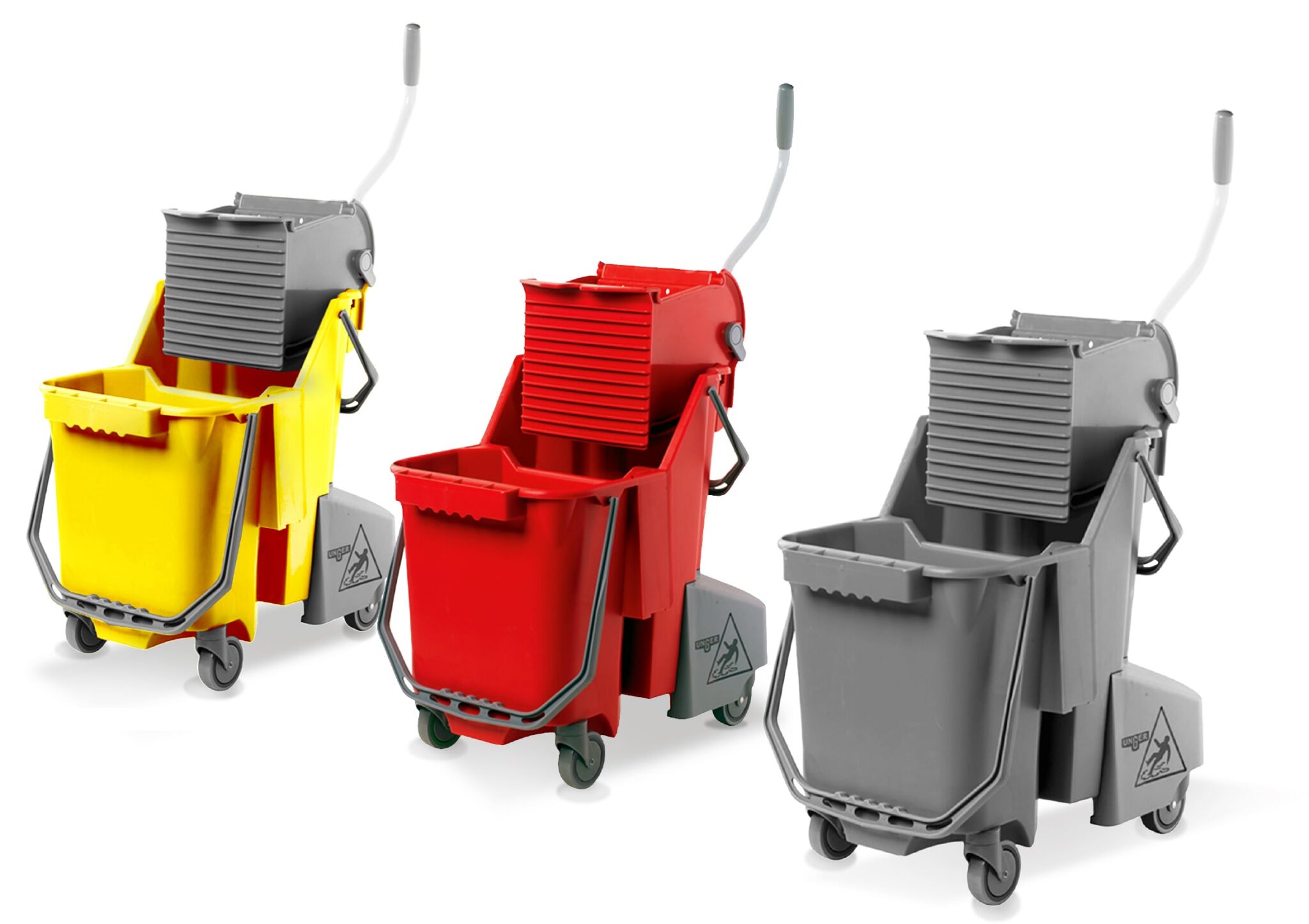
Reduce Bacteria and Cross Contamination with Dual Compartment Mop Buckets
Learn More!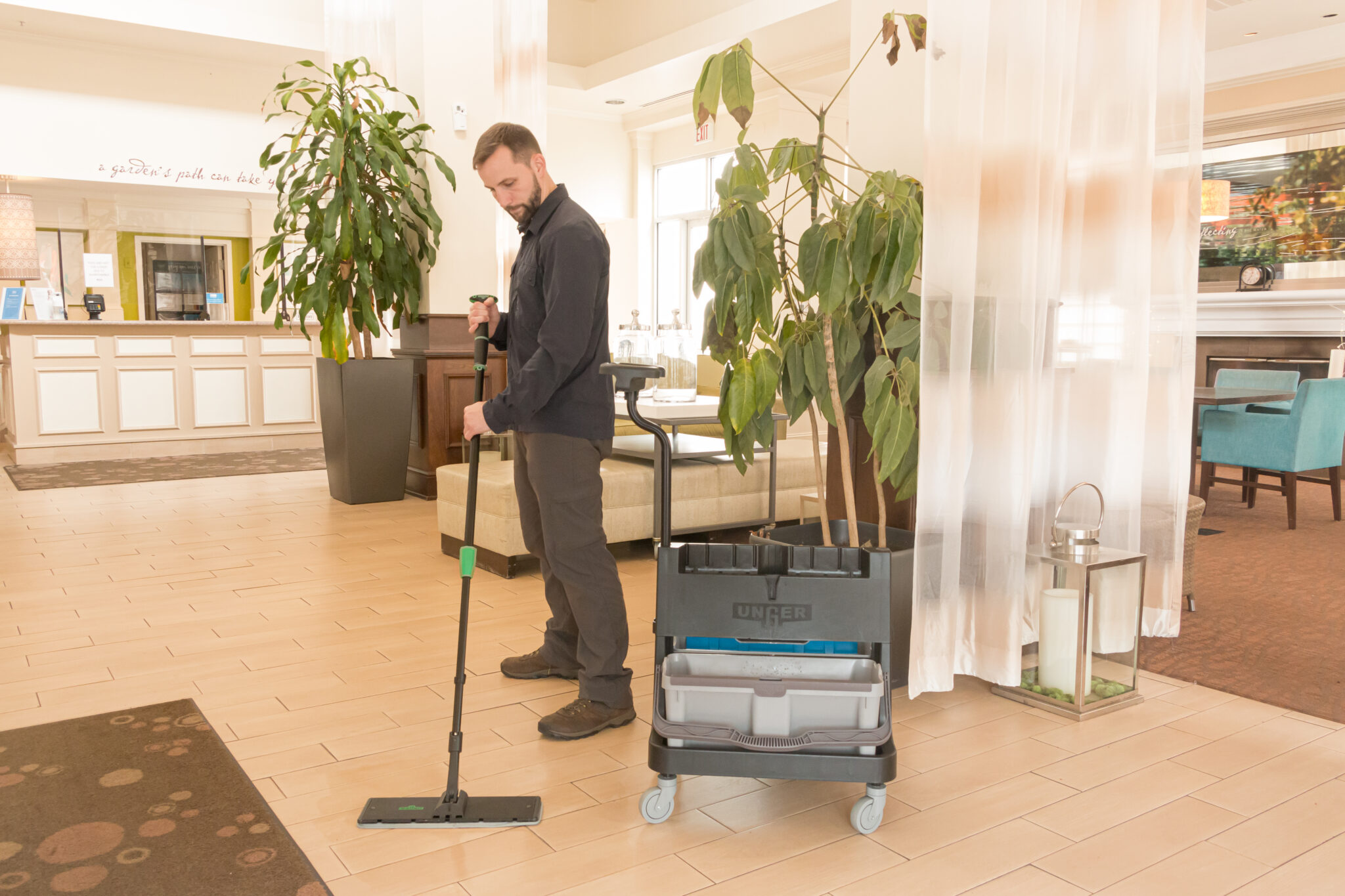
Key Takeaways
In busy facilities, safety risks are not always tied to broken equipment, damaged flooring, or major spills. Sometimes, the risk is much harder to see.
A thin film of water left behind after routine cleaning can change how safely one can walk on a floor. For building service contractors, operations directors, and venue cleaning supervisors, that matters. Floors still need to be cleaned, but they also need to be dry and ready for staff, guests, and visitors as soon as possible.
This is where commercial floor cleaning becomes a safety issue. The tools and methods used to clean floors directly affect how much water is left behind, how long surfaces take to dry, and how much risk remains after cleaning is complete.
Slip-and-fall risks continue to be a major safety concern across commercial facilities. Based on initial data in this 2022 study, wet floors caused nearly half (41%) of slips, trips, and falls.
In high-traffic spaces, floors are rarely static. Entryways collect moisture. Concessions and restrooms see repeated spills. Event spaces, schools, offices, and public venues often need cleaning between traffic waves, not only after the building is empty.
Common contributors of slip and falls include:
The issue is not always the quality of the cleaning. In many cases, the tools and workflow simply use more water than necessary.
A very small amount of water can change how a floor performs. According to the National Floor Safety Institute, a water film as thin as 0.005 inches, about the thickness of a sheet of paper, can reduce floor traction by half or more.
That is why wet floor hazards can appear even when a floor does not look soaked. A light film of water can sit between the shoe and the floor surface, reducing friction and changing how safely people can walk across the area.
For cleaning teams, this makes dry time a critical part of floor cleaning safety. The longer water remains on the surface, the longer the floor stays in a higher-risk condition.
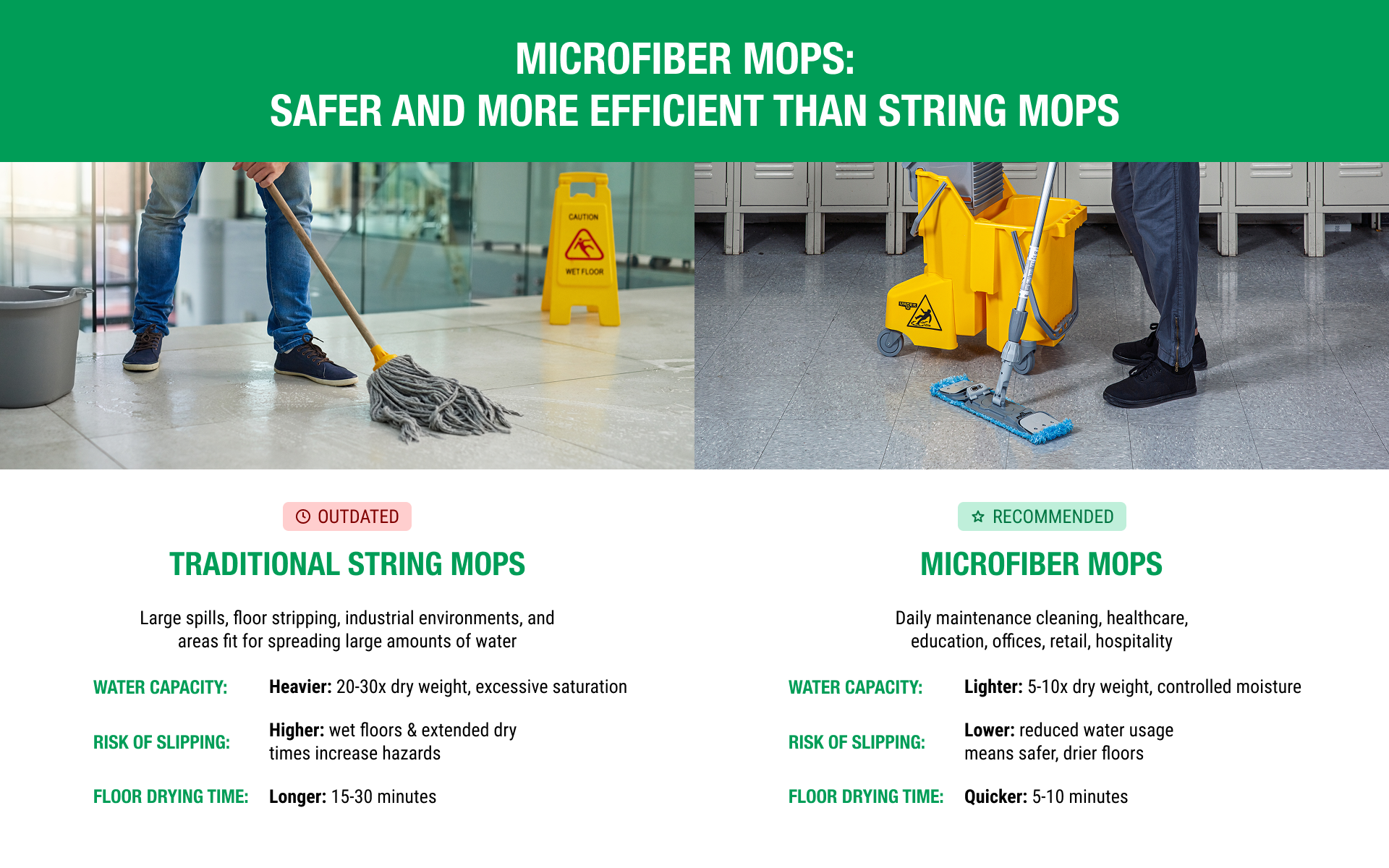
Traditional string mopping has been used for decades because it is familiar, simple, and widely available. But in modern commercial floor cleaning, it often leaves more water behind than facilities need.
A typical commercial mop bucket may hold 6.5 to 8.75 gallons of water. That volume can be useful for some tasks, but it also increases the chance of applying more liquid than the floor requires.
Traditional cotton string mops are designed to absorb and retain large amounts of water. Even after wringing, the mop head can still hold excess moisture that continues spreading across the floor with every pass. On smooth flooring surfaces, that extra water can significantly increase dry times and leave floors wetter than necessary.
This creates three problems for busy facilities:
In high-traffic floor cleaning, those minutes matter. A floor that takes several minutes to dry can disrupt traffic flow, increase the need for caution signage, and increase the risk for slip and falls.
More water does not automatically mean a cleaner floor. In fact, excess water can make the cleaning process less efficient.
Traditional mopping with a string mop and a large single-chamber mop bucket can leave floors wet for up to half an hour (and sometimes longer). That dry-time window is one of the highest-risk periods for slips because the surface may look clean but still hold enough moisture to reduce traction.
Too much water can also dilute cleaning chemistry, spread soil, and leave visible streaking once the floor dries. In active facilities, the problem becomes even more noticeable because people may walk through the area before the surface has fully dried.
For facility teams, this creates a balance between cleaning speed and floor safety. Crews need to remove soil quickly, but they also need floors to return to service as soon as possible. The less unnecessary water left behind, the easier that balance becomes.
Microfiber mopping changes the way cleaning teams manage water. Instead of relying on a saturated mop head, microfiber pads use fine fibers to lift and capture soil with less liquid.
The benefits are practical:
The goal is not to remove water from the process completely. It is to use only what is needed to clean effectively.
Modern microfiber mopping systems are built around control. Instead of dipping a mop into a large bucket and applying water continuously, systems like Unger Excella dispense solution on demand.
That gives cleaning teams more control over how much liquid reaches the floor. The Excella system uses microfiber pads and reservoir options ranging from 1-liter bottles to a 5-liter backpack. Solution is released through a trigger actuator, so water is applied only when needed.
For operations teams, that combination matters. Less water on the floor can help reduce slip exposure while still supporting strong cleaning performance.
Floor safety is not only about what happens after a spill. It is also shaped by everyday cleaning routines.
When traditional mopping leaves excess water behind, facilities face longer drying windows and more wet floor hazards. Microfiber mopping systems that use less water give cleaning teams a more controlled way to clean high-traffic areas while supporting faster dry times and more consistent results.
Discover floor cleaning systems that use less water and reduce risk.
Wet floors reduce traction, especially on smooth commercial surfaces. Even a thin film of water can make it harder for shoes to grip the floor properly.
Not always. Too much water can spread soil, increase drying time, and leave residue behind. Microfiber mopping can clean effectively with less water.
Traditional mopping can leave floors wet for at least 30 minutes, depending on the surface, airflow, water volume, and cleaning method used.
Microfiber mopping supports better soil pickup with less water. This can shorten dry times and reduce the amount of moisture left on the floor.
Facility teams should look for systems that control water application, use durable microfiber pads, and support fast, consistent cleaning in high-traffic areas.